Why Chimney Condition Matters When Replacing a Boiler
A boiler replacement involves more than selecting equipment with the right heating capacity. The system also needs an appropriate way to vent combustion gases outdoors. For a conventional chimney-vented boiler, the condition of the chimney becomes part of that decision. If the chimney needs repairs to support the replacement equipment, those costs belong in the project budget alongside the boiler installation. 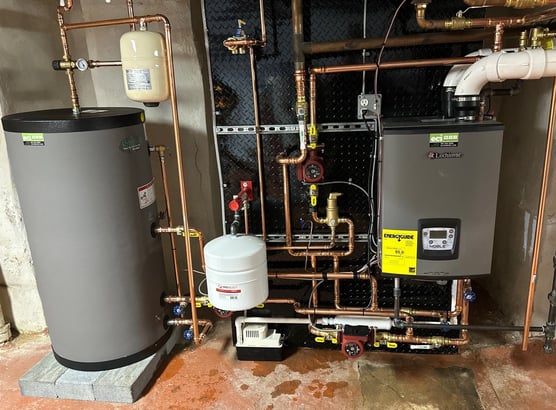
That was the situation in this home. The existing boiler was operating, but the chimney created an expense the customer could not overlook. Looking at the heating equipment alone would have left out an important part of the comparison. The customer needed to understand what each complete installation would cost and what that investment would provide.
How Sidewall Venting Changed the Project
The new Lochinvar boiler uses sidewall venting instead of the existing chimney. That change addressed the venting concern that started the project. The replacement heating system no longer depended on repairing the chimney for boiler use. For the customer, this offered a practical path forward: replace the heating equipment and establish a suitable venting arrangement as part of the same project.
Sidewall venting still requires careful planning. The vent route, termination location, materials, and clearances must follow the requirements for the selected equipment and installation. The benefit here was specific to the home’s circumstances. A compatible high-efficiency boiler provided an alternative to continuing with the chimney-based setup.
Moving From an 80% Boiler to High-Efficiency Heating
The existing boiler was approximately 80% efficient. Replacing it with a high-efficiency Lochinvar system gave the customer an opportunity to improve heating efficiency while resolving the venting issue. A boiler’s AFUE rating describes how efficiently it converts fuel into useful heat over a typical heating season. Higher-rated equipment can direct a greater share of that fuel energy toward heating the home.
The exact efficiency rating depends on the installed model. Actual fuel consumption also depends on weather, thermostat settings, system design, maintenance, and operating conditions. For this project, the immediate financial advantage came from the installation comparison. The customer paid less upfront than the conventional replacement and chimney repair option while choosing equipment designed for higher-efficiency operation. Potential operating savings provide an additional reason to consider the upgrade, although no specific utility savings were established for this home.
Adding an Indirect Water Heater to the New Boiler System
The project included another important change: replacing the standalone water heater with an indirect-fired storage tank. An indirect water heater uses heat supplied by the boiler to warm the home’s domestic hot water. A heat exchanger transfers that heat while keeping the boiler water separate from the water used at faucets and fixtures.
This arrangement allows the boiler to support both space heating and domestic hot water production, with the heated domestic water stored in a separate tank. For the customer, the replacement became more than a heating equipment upgrade. The new boiler and indirect tank created an integrated approach to two everyday needs: a warm home and hot water for household use.
What the Customer Gained From the Upgrade
The finished project addressed the original venting concern while updating both heating and hot water equipment.
4 pros from the upgrade:
1. A lower upfront project cost: The selected upgrade cost less than the conventional boiler replacement combined with the quoted chimney repairs.
2. High-efficiency heating equipment: The Lochinvar boiler replaced the existing 80% efficient system.
3. A different venting arrangement: Sidewall venting removed the new boiler’s reliance on the deteriorating chimney.
4. Integrated domestic hot water: An indirect-fired storage tank replaced the standalone water heater.
Considering Boiler Replacement When Your Chimney Needs Repairs?
A chimney repair estimate can raise questions about more than masonry. For a home with a chimney-vented boiler, it may be a useful time to compare heating system options before committing to the existing arrangement. This customer’s boiler was still working. The opportunity came from considering the full cost of the next step.
A high-efficiency Lochinvar boiler and indirect water heater provided a solution that updated the home’s equipment, changed its venting approach, and reduced the upfront cost compared with the conventional replacement option. ECI Comfort helped evaluate the alternatives and complete the installation. The customer’s priorities guided the choice: address the chimney concern, make a sound investment, and select heating and hot water equipment suited to the home. 
ECI Comfort specializes in installing Lochinvar boilers in and around Bucks, Montgomery, and Philadelphia area. If you are interested and would like to know more, click the button above or reach us at (215)245-2300 or info@ecicomfort.com