Can You Add a Heat Pump to an Existing High-Velocity System?
For this home, the answer was yes—with careful evaluation and a few necessary adjustments. High-velocity heating and cooling systems use small-diameter supply ducts and compact outlets to distribute conditioned air. Replacing the equipment requires confirming that the ductwork and airflow design can support the new system.
The home’s existing high-velocity ductwork, originally installed by ECI Comfort, offered a useful starting point. An evaluation determined that much of it could remain in service with compatible replacement equipment. That made the heat pump option more financially manageable. The customer could put the existing infrastructure to work rather than take on the expense of replacing the entire duct system. Reusing ductwork still requires looking beyond whether the connections fit. The replacement equipment needs an air-distribution system designed to support its operating requirements.
Why Additional Supply Outlets Were Part of the Upgrade
One important part of this high-velocity HVAC replacement was adding several supply outlets. Small-duct systems depend on the relationship between airflow, outlet capacity, and static  pressure. The number and arrangement of outlets must suit the equipment and the home’s design.
For this project, airflow requirements and design calculations identified the need for additional outlets. Those additions helped adapt the existing distribution system to the new equipment. It is a detail that can be easy to overlook when comparing replacement options. The outdoor unit may attract the most attention, yet the ductwork and outlets play an essential role in delivering heating and cooling throughout the home. The goal was to reuse what remained suitable while making the changes needed to support the upgraded system.
A Heat Pump and Boiler: Two Heating Options for One Home
The customer’s new setup combines an electric heat pump with the existing natural gas boiler. During milder fall and spring weather, the heat pump can provide heat through the high-velocity duct system. This gives the customer an alternative to running the boiler whenever the home needs warmth. During colder weather, the boiler remains available to meet heating demand when it is the more appropriate or economical choice.
This dual-heat approach gives each system a role. The heat pump adds heating capability alongside summer cooling, while the boiler continues to provide an established source of heat. Keeping the boiler offers another practical benefit: it remains an available heating source if the heat pump requires service. The household gains flexibility without giving up the heating system already serving the home.
When Should the Boiler Take Over From the Heat Pump?
There is no single outdoor temperature that makes sense for every heat pump and boiler combination. Freezing weather alone does not establish the right switchover point. The decision depends on the heat pump’s heating capacity and efficiency at different temperatures, the home’s heating requirements, electricity and natural gas prices, and the control setup.
For this customer, the strategy is to use the heat pump during favorable conditions and retain the boiler for times when it better meets the home’s needs. A carefully selected operating strategy helps the two systems complement one another. The customer has options as temperatures change rather than relying on the same heating source in every situation.
Can a Heat Pump Help Reduce Natural Gas Use? 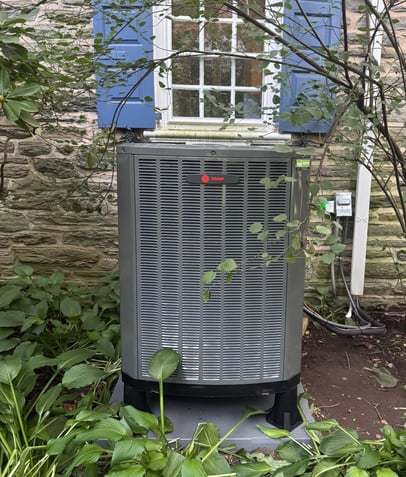
Using the heat pump for some of the home’s heating can reduce the amount of heat the boiler needs to supply. That creates an opportunity to lower natural gas consumption, particularly during milder parts of the heating season. Total utility savings depend on more than gas usage, however. The heat pump uses electricity, so operating costs must account for both energy sources.
Actual results will depend on weather, thermostat settings, equipment performance, utility rates, and how the systems are operated. No specific savings figure was established for this project. The value of the upgrade is the added choice: the customer can use an alternative heating source when conditions make it worthwhile.
Considering a High-Velocity Heat Pump Upgrade?
An aging high-velocity air-conditioning system does not always need a like-for-like replacement. Depending on the equipment and ductwork, replacement may be an opportunity to add heat-pump heating while keeping an existing boiler.
This project began with equipment approaching replacement age. It ended with a more flexible heating and cooling setup built around infrastructure the home already had. ECI Comfort’s role was to evaluate compatibility, make the necessary airflow adjustments, and help the customer put that solution in place. The customer gained another way to heat the home, updated cooling equipment, and the reassurance of keeping the boiler available.

ECI Comfort specializes in installing Trane systems in and around Bucks, Montgomery, and Philadelphia area. If you are interested and would like to know more, click the button above or reach us at (215)245-2300 or info@ecicomfort.com