When an HVAC system starts getting older, replacing it isn't always as simple as taking out the old equipment and putting a newer version of the same thing back in.
For this Philadelphia homeowner, the aging system was still operating, but repairs were becoming more expensive. At the same time, there were comfort problems that replacing equipment alone wouldn't necessarily solve. The first floor could feel humid. Temperatures weren't consistent throughout the house. And after years of heating primarily with natural gas, the homeowner was interested in using less fossil fuel.
That created an interesting question: Could a new HVAC system reduce natural gas use, improve humidity control and make the home more comfortable — without giving up gas heat entirely?
In this case, the answer was a properly sized hybrid heat pump system.
The Existing 4-Ton Air Conditioner Was Too Large
One of the most important discoveries came before selecting any new HVAC equipment. A heating and cooling load calculation was performed to determine how much capacity the home actually needed. The results showed that the existing 4-ton air-conditioning system was oversized for the home's cooling requirements.
It sounds counterintuitive. If four tons of cooling is good, wouldn't more capacity mean a cooler, more comfortable house? Not necessarily. An oversized air conditioner can cool a home very quickly, but quick cooling isn't always better cooling. When the thermostat reaches its set temperature too quickly, the air conditioner shuts off sooner. Those shorter operating cycles can reduce the amount of time the system has to remove moisture from the indoor air.
That can be especially noticeable during a humid Pennsylvania summer. For a homeowner already experiencing high indoor humidity, simply replacing an oversized 4-ton air conditioner with another 4-ton system could have carried the same underlying problem into the new installation. The load calculation showed that a 3-ton HVAC system was a better match for the home's actual needs.
Can an Oversized AC Cause High Humidity?
There are many potential causes of high indoor humidity, including air leakage, ductwork, insulation, ventilation and moisture entering the home. But HVAC sizing can play an important role. An air conditioner doesn't just lower the temperature. As warm indoor air passes across the cold evaporator coil, moisture condenses out of that air. That process takes time.
When an oversized AC cools the house too quickly, the thermostat may be satisfied before the equipment has had enough runtime to remove as much moisture as a properly sized system could.
A properly sized air conditioner or heat pump can typically operate for longer, steadier cycles. Pairing that correct sizing with two-stage HVAC equipment gives the system another tool for maintaining more consistent comfort and improving humidity removal. For this home, downsizing wasn't a compromise. The smaller system was actually the better fit.
Why Choose a Hybrid Heat Pump System?
The homeowner had another priority that went beyond replacing an aging air conditioner and furnace. They wanted to use less natural gas. Going completely electric is one option, but it isn't the only way to incorporate a heat pump into a Pennsylvania home. A hybrid heat pump system, also called a dual-fuel HVAC system, combines an electric heat pump with a gas furnace.
During moderate weather, the heat pump can provide the home's heat using electricity instead of burning natural gas. When outdoor conditions get colder and the home requires more heating capacity, the system can transition to the gas furnace. For this homeowner, that provided an appealing middle ground. The heat pump could become the primary heating source during much of the milder heating season, reducing reliance on fossil fuel, while the high-efficiency furnace remained available for colder Pennsylvania weather.
Heat Pump vs. Gas Furnace: Why Keep Both?
A heat pump and a gas furnace create heat in very different ways. A furnace burns fuel to create heat. A heat pump moves heat from one place to another. Even when it's cold outside, there is still thermal energy available in the outdoor air. A heat pump extracts that energy and transfers it into the home. Because of that difference, the air coming from a heat pump can feel cooler than the supply air homeowners are accustomed to feeling from a gas furnace.
That doesn't mean the heat pump isn't heating the house. It simply delivers heat differently. For homeowners who enjoy the warmer supply-air temperatures associated with a furnace on particularly cold days, a dual-fuel heat pump and gas furnace system can provide both experiences. The homeowner doesn't have to choose between using a heat pump and keeping gas heat.
The house can use each technology where it makes the most sense.
Why Two-Stage HVAC Equipment?
The new system uses two-stage technology for both the heat pump and gas furnace. Unlike basic single-stage equipment that essentially operates at one primary capacity whenever it's running, two-stage equipment can operate at a lower stage when the home's heating or cooling demand is smaller and move to a higher stage when additional capacity is required. 
Think about a mild summer day compared with a 95-degree afternoon. The home doesn't need the same amount of cooling under both conditions. The same principle applies to heating.
Two-stage operation allows the equipment to better adapt to changing conditions rather than treating every heating or cooling call as if it were the most extreme day of the year. Those longer, lower-stage operating cycles can also help maintain more consistent temperatures and provide additional time for humidity removal during cooling operation. For a home where uneven temperatures and high humidity were already concerns, that made two-stage equipment an especially useful part of the solution.
The New Ruud Hybrid HVAC System
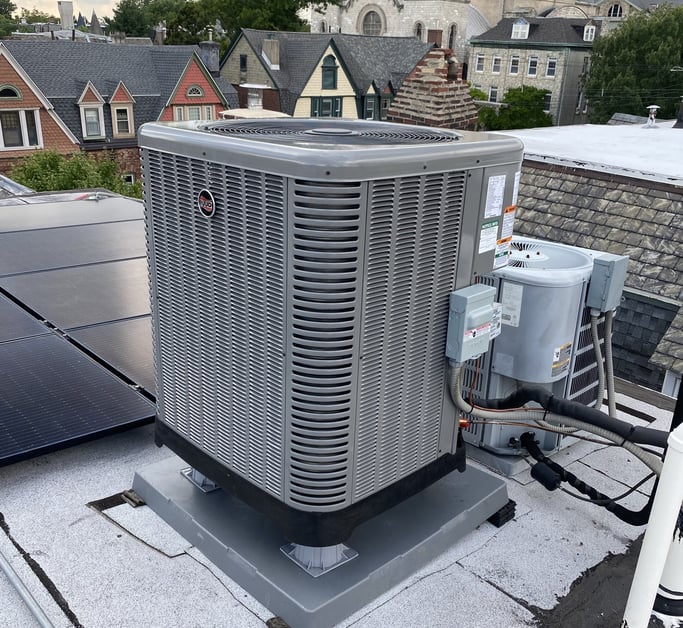
The final equipment selection paired a 3-ton Ruud 15 SEER two-stage heat pump with a 96% AFUE Ruud two-stage gas furnace with a variable-speed blower.
Ruud 15 SEER Two-Stage Heat Pump
The Ruud heat pump now handles two jobs. During the summer, it provides the home's air conditioning. During appropriate colder weather, the same system can reverse operation and provide heat. Two-stage operation allows the heat pump to spend more time operating at a lower capacity when conditions don't require full output. That can mean longer, steadier operating cycles rather than frequent starts and stops — an important consideration for both temperature consistency and humidity control. And because the heat pump can provide heat without burning natural gas in the home, it gives the homeowner the opportunity to reduce gas consumption throughout the heating season.

Ruud 96% Two-Stage Gas Furnace
When the home needs gas heat, the new furnace provides 96% AFUE efficiency. AFUE stands for Annual Fuel Utilization Efficiency and describes how efficiently a furnace converts fuel into useful heat over a heating season. The furnace also provides two stages of heating, allowing it to better match its output to the home's needs instead of always operating at maximum heating capacity.
A variable-speed blower adds another layer of control by allowing airflow to adjust rather than simply operating at one fixed speed. Together, those features are designed around a simple objective: Give the house the heating, cooling and airflow it needs without automatically giving it more than it needs.

Considering a Heat Pump or HVAC Replacement in Philadelphia, PA?
If you're considering an HVAC replacement in Philadelphia, PA, an aging furnace or air conditioner can be an opportunity to look beyond simply replacing what's already there.
For this homeowner, the answer was a 3-ton Ruud two-stage heat pump paired with a 96% AFUE two-stage variable-speed Ruud gas furnace, along with an additional first-floor return. The equipment gave the homeowner a path toward using less natural gas without requiring them to give up gas heat entirely. Proper sizing addressed an important weakness of the old system, while two-stage operation, variable-speed airflow and improved return-air circulation were selected around the home's existing comfort concerns.
The old HVAC system didn't simply need a newer replacement. The house needed equipment that better matched the way the house actually works. ECI Comfort's role was to perform the load calculation, identify the airflow opportunity, explain the available options and help the homeowner put together a heating and cooling system that fit those priorities.

ECI Comfort specializes in installing Ruud Heat Pumps and Furnaces in and around Bucks, Montgomery, and Philadelphia area. If you are interested and would like to know more, click the button above or reach us at (215)245-2300 or info@ecicomfort.com